

Other
Maksim Samorukov
{
  "authors": [
    "Maksim Samorukov"
  ],
  "type": "commentary",
  "blog": "Carnegie Politika",
  "centerAffiliationAll": "",
  "centers": [
    "Carnegie Endowment for International Peace",
    "Carnegie Russia Eurasia Center"
  ],
  "englishNewsletterAll": "",
  "nonEnglishNewsletterAll": "",
  "primaryCenter": "Carnegie Russia Eurasia Center",
  "programAffiliation": "",
  "regions": [
    "Russia",
    "Europe"
  ],
  "topics": [
    "EU Foreign Policy",
    "EU",
    "Global Governance",
    "Foreign Policy"
  ]
}
Source: Getty
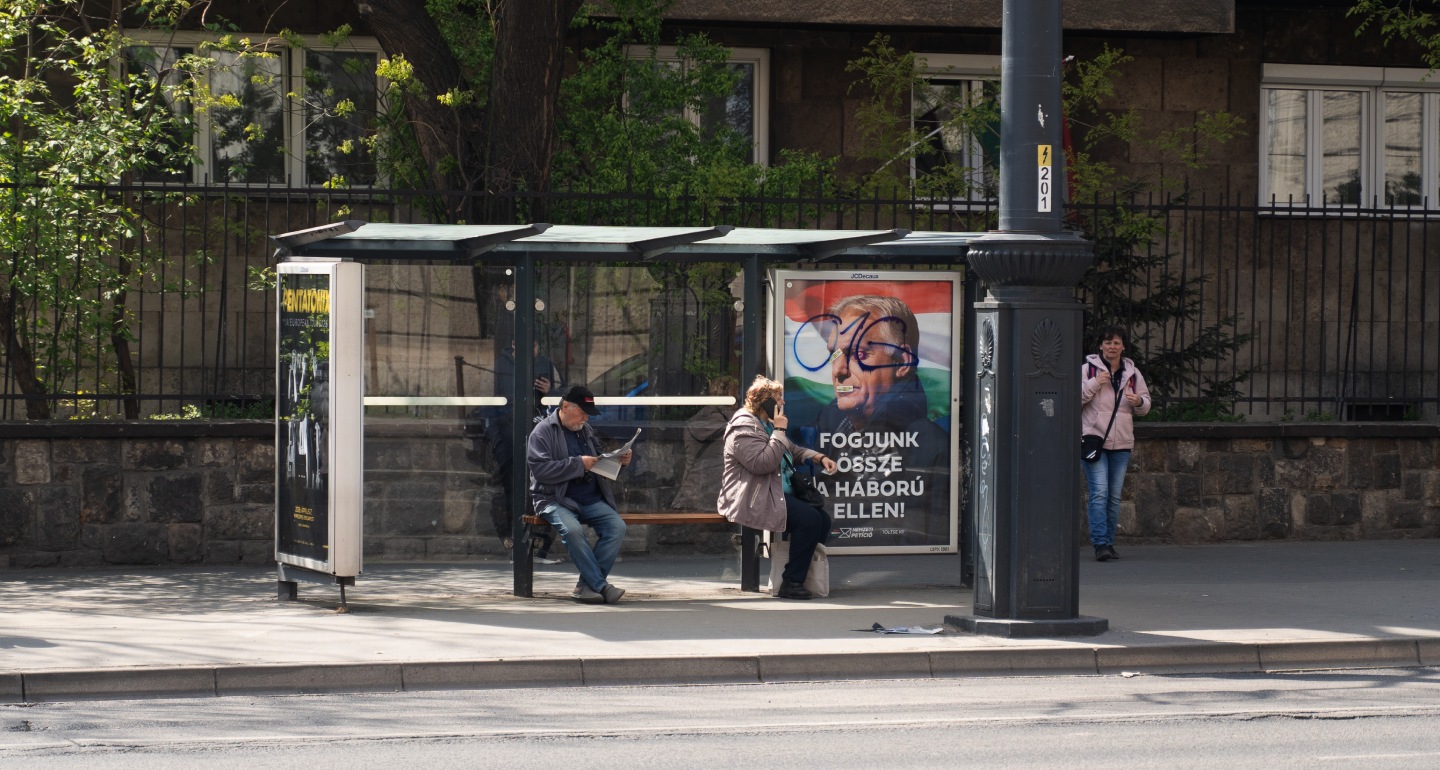
Orbán created an image for himself as virtually the only opponent of aid to Ukraine in the entire EU. But in reality, he was simply willing to use his veto to absorb all the backlash, allowing other opponents to remain in the shadows.
Despite the defeat of Hungary’s longtime prime minister Viktor Orbán’s party in the country’s parliamentary election on April 12, the newly elected opposition party Tisza is unlikely to make radical changes. Its leader Péter Magyar may be expected to end Hungary’s reputation as the most pro-Russian country in the EU, but there are certain objective necessities in dealing with Russia, Ukraine, and Europe that no Hungarian leader can escape.
Hungary was dependent on Russia for its energy requirements long before Orbán. Even back during the Cold War, Hungary, which sought to avoid angering Moscow after the 1956 Soviet invasion, had more Soviet gas and oil in its economy than most of the socialist bloc. Attempts at diversification in the 1990s yielded only partial results, and rising energy prices in the 2000s forced Budapest to once again accept Moscow’s proposals.
Hungary was one of the most enthusiastic proponents of the ill-fated South Stream gas pipeline project, which was planned to run along the bottom of the Black Sea to bypass Ukraine. During the project’s planning, then prime minister Ferenc Gyurcsány met with Russian leader Vladimir Putin on numerous occasions, despite criticism from Brussels, Washington, and then opposition leader Orbán.
Deals with the Kremlin were nothing new for Hungarian voters, and it was not public resistance to cooperation with Moscow that led to the defeat of either Gyurcsány’s Socialist Party in 2010 or Orbán’s Fidesz in 2026. There may not be much love lost for Russia in Hungarian society, but there is not a lot of trust for many other countries either.
Rather, Orbán’s demise was precipitated by the protracted stagnation of the Hungarian economy and his apparent loss of interest in the day-to-day affairs of government. After a total of twenty years at the helm, he was far more interested in meeting with global leaders and facilitating ultra-right parties around Europe than in attempting an economic recovery at home.
The price of this disregard for domestic issues was the rapid rise of a new opposition force: Tisza. Its leader Magyar and most of the party’s small leadership come from the same ruling elite as Fidesz. Until 2024, Magyar was working his way up through various positions in the state apparatus.
Tisza’s opposition to Fidesz is therefore not so much values-based as generational: it is a small party of a few prominent politicians who are ready to take advantage of fatigue with Orbán to wrest key positions away from him and his cronies. As far as Orbán’s values are concerned, Tisza’s main worry is that they are costing the country too much: Hungary has been unable to receive billions in frozen European subsidies for several years due to Fidesz’s ideological standoff with Brussels.
Now, riding a wave of triumph, Magyar is promising to purge Fidesz’s personnel where possible. But a huge number of key positions remain occupied by nominees of the former ruling party—from the president and the prosecutor general to Supreme Court judges and heads of public media. Replacing everyone all at once (not to mention with due process) is an impossible task that would risk the state apparatus and big business rising up against the new leader.
Magyar and his few allies are left with the choice of either limiting themselves to cosmetic changes within the existing system or entering into a long and arduous struggle with the old guard with little chance of success.
The same applies to the new Hungarian government’s relations with Moscow and Kyiv. The circle of Hungarian beneficiaries from the country’s energy dependence on Russia is not limited to Orbán and his relatives. Multibillion-dollar Russian loans for the construction of the Paks Nuclear Power Plant, the resale of Russian gas from the TurkStream pipeline, and discounted oil via the Druzhba pipeline all constitute a significant part of the Hungarian economy. No leader could afford to sacrifice all that overnight.
Indeed, despite EU support, Magyar made no such promises even before the election. His statements on the matter were rare and evasive, with plans to check existing agreements for corruption and gradually reduce dependence on Russian supplies by the mid-2030s, which is not exactly in line with Brussels’s requirements to have stopped all imports of Russian energy by the end of 2027.
Much will depend on how strictly the EU links ending Russian energy imports to the release of EU subsidies. However, there is reason to believe that a significant proportion of the funds will be released without any particular concessions from Budapest: the EU leadership is so heartily sick of Orbán that it looks set to reward Hungarian society simply for removing him from power. Reducing the share of Russian energy supplies in the Hungarian economy can take a back seat for now.
Of course, the Kremlin, accustomed to building its foreign policy on personal ties, will face a certain amount of inconvenience due to the departure of Orbán’s team and the disappearance of his guaranteed veto on any aid projects for Ukraine. Moscow is unlikely to be able to establish similarly close ties with Magyar in the current conditions, and lobbying for exemptions from sanctions will become more difficult. But none of that means that with the replacement of Orbán, the EU will instantly transform into an effective machine for putting pressure on Moscow and supporting Kyiv.
Following Orbán’s heated disputes with the Ukrainian leadership, Magyar is expected to take conciliatory steps toward Ukraine. But even in this respect, expectations may be overstated. Magyar insists that Ukraine should only be able to join the EU following a corresponding referendum in Hungary, opposes arms deliveries to Ukraine, and has said that the rights of the Hungarian minority in Ukraine are being eroded. Polls show that although Tisza voters have better views of Ukraine than Fidesz supporters, even among the former, more people (36 percent) see Ukraine as a threat than do not (32 percent).
The fact is that the issue of Ukraine’s EU integration is becoming increasingly unpopular in the bloc’s eastern part. Countries from Poland to Bulgaria see Ukraine as a direct competitor for European subsidies, jobs, and agricultural markets, and many also see it as an obstacle to accessing Russian energy supplies.
With his vociferous recalcitrance, Orbán created an image for himself as virtually the only opponent of aid to Ukraine in the entire EU. But in reality, he was simply willing to wield his veto and absorb all the backlash, allowing other opponents to remain in the shadows. In his absence, someone else is likely to step up and call for second thoughts on providing extra help to Kyiv or imposing new sanctions on Moscow.
The EU’s mounting internal problems, growing tensions with the United States, the war in the Middle East, and record energy prices mean that the conditions for helping Ukraine and putting pressure on Russia are becoming increasingly unfavorable, regardless of who the Hungarian prime minister is. It would be naive to believe that replacing one leader of a small European country with a similar (albeit younger) one is enough to fundamentally change the situation.
Fellow, Carnegie Russia Eurasia Center
Samorukov is a fellow at the Carnegie Russia Eurasia Center.
Recent Work
Maksim Samorukov
Maksim Samorukov
Carnegie does not take institutional positions on public policy issues; the views represented herein are those of the author(s) and do not necessarily reflect the views of Carnegie, its staff, or its trustees.
What should happen when sanctions designed to weaken the Belarusian regime end up enriching and strengthening the Kremlin?

Denis Kishinevsky
The supposed threats from China and Russia pose far less of a danger to both Greenland and the Arctic than the prospect of an unscrupulous takeover of the island.

Andrei Dagaev
Western negotiators often believe territory is just a bargaining chip when it comes to peace in Ukraine, but Putin is obsessed with empire-building.

Andrey Pertsev
Unexpectedly, Trump’s America appears to have replaced Putin’s Russia’s as the world’s biggest disruptor.

Alexander Baunov
The future of the Belarus track will depend less on Minsk’s intentions than on whether the EU can move beyond symbolic unity and adopt a strategic approach toward a neighbor central to Europe’s security architecture. Without a more active EU role, these processes will unfold under conditions set entirely by Minsk and Moscow.

Balázs Jarábik