

Commentary
Michael Young
{
  "authors": [
    "Michael Young"
  ],
  "type": "commentary",
  "blog": "Diwan",
  "centerAffiliationAll": "",
  "centers": [
    "Carnegie Endowment for International Peace",
    "Malcolm H. Kerr Carnegie Middle East Center"
  ],
  "collections": [
    "The Iran War’s Global Reach",
    "Decoding Lebanon"
  ],
  "englishNewsletterAll": "",
  "nonEnglishNewsletterAll": "",
  "primaryCenter": "Malcolm H. Kerr Carnegie Middle East Center",
  "programAffiliation": "",
  "regions": [
    "Lebanon",
    "Israel",
    "United States",
    "Levant",
    "Iran"
  ]
}
Source: Getty
Beirut’s desire to break free from Iranian hegemony may push it into a situation where it has to accept Israel’s hegemony.
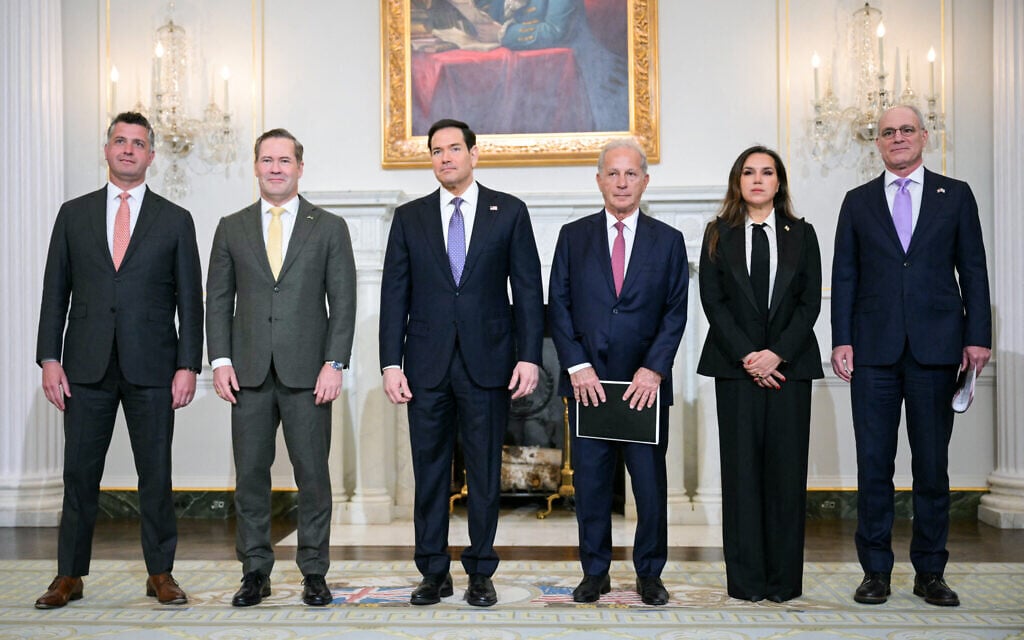
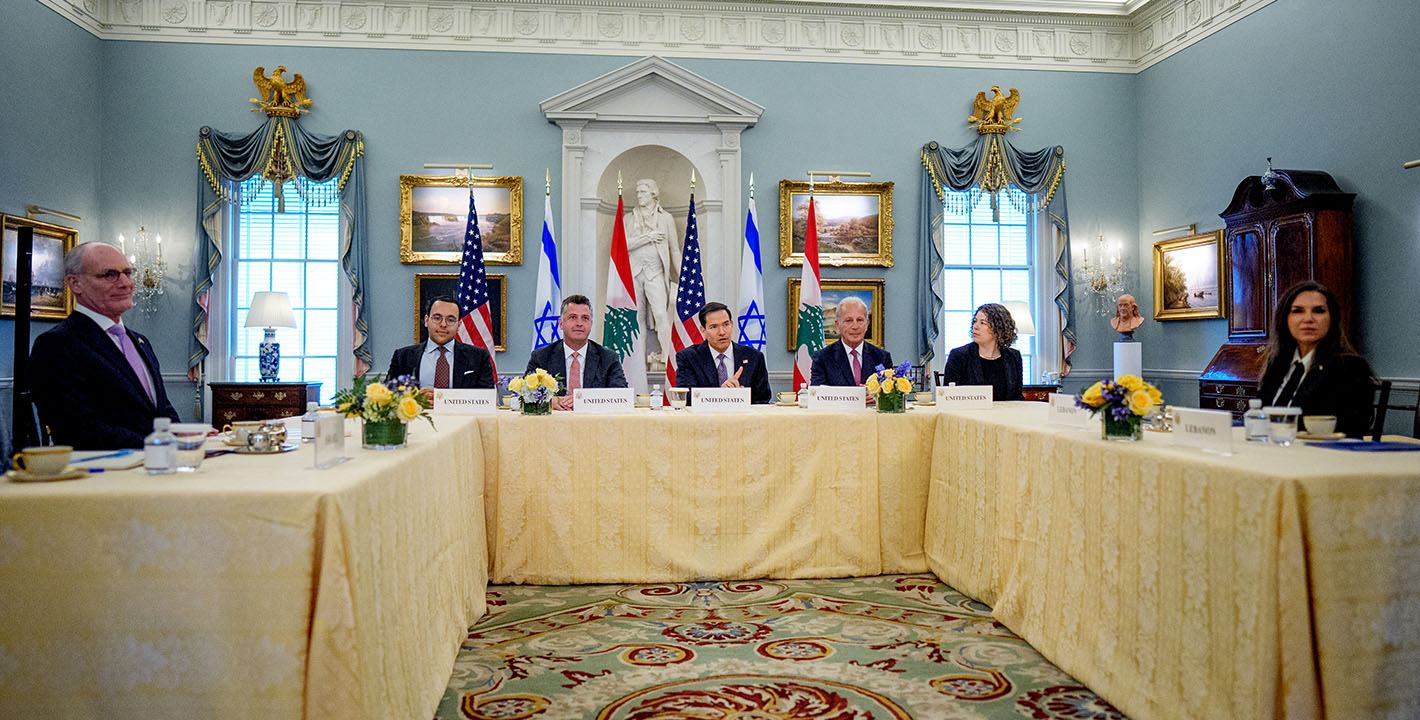
On April 14, the Lebanese and Israeli ambassadors to the United States met under the auspices of the U.S. secretary of state, Marco Rubio, in Washington. Supporters of peace between the two countries used superlatives to describe what had happened. However, it would have been wiser to hold back, because the practical consequence of the talks is to place Lebanon at the center of a harsh Iranian-Israeli struggle for influence in the Middle East. It’s hard to see how Lebanon can come out of this intact.
There were two sharply contrasting reactions in Lebanon following the Washington meeting. Those who welcomed it saw it as a first step in emancipating Lebanon from Iranian hegemony and Hezbollah. Last week, officials in Beirut affirmed that only the national government could speak for Lebanon, implying that they did not want the country’s fate to be on the negotiating table between Iran and the United States in Islamabad. Particularly egregious was the Iranian reaction to this Lebanese declaration of independence, with Ali Akbar Velayati, an advisor to Iran’s supreme leader, tweeting, “Mr. Nawaf Salam must know that ignoring the unparalleled role of the Resistance and the heroic Hezbollah will expose Lebanon to irreparable security risks. The stability of Lebanon lies solely in the synergy between the government and the Resistance.” His implied threat was lost on no one.
On the other side was a contrary narrative, pointing out that those who imagined that peace with Israel would liberate Lebanon from foreign hegemony were making a mistake, since Israeli intentions in the country were no less hegemonic. In a speech on the eve of the Washington meeting, Hezbollah’s secretary general, Naim Qassem, urged the government not to attend, saying the party “rejected negotiations with the usurping Israeli entity.”
Velayati’s and Qassem’s reactions underscored that Iran won’t surrender its Lebanon card easily. This will likely manifest itself through heightened tensions inside Lebanon, greater mobilization in the street against negotiations with Israel, perhaps even attacks against the negotiators themselves, if not threats of civil war. Opposition may also conceivably take on a regional dimension as countries that also oppose Israeli hegemony collaborate with Iran to derail any prospect of Lebanon falling into an Israeli sphere of influence. Türkiye, for example, cannot welcome the prospect of Israel’s domination of Lebanon when the latter is effectively an extension of Syria, where Turkish influence already faces significant Israeli pushback.
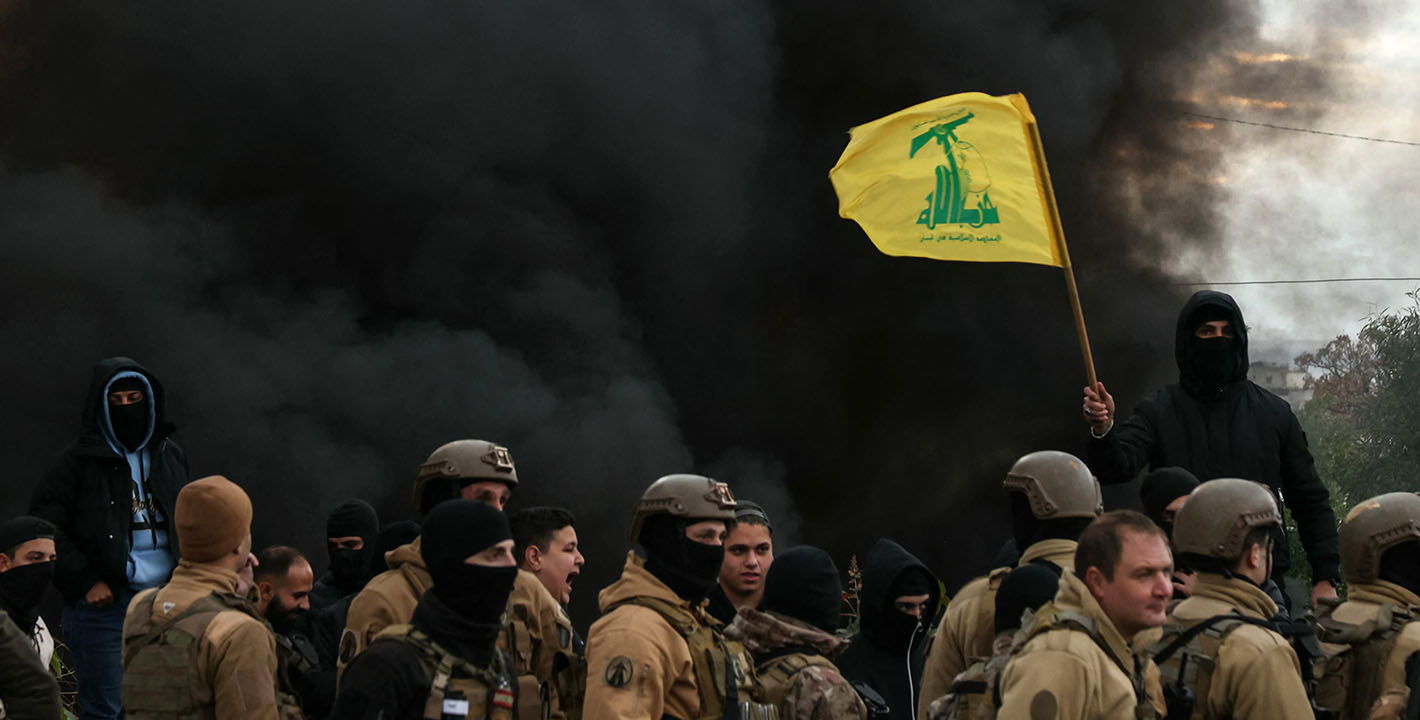
A major obstacle for the Lebanese government will be to disarm Hezbollah. The fact that Nawaf Salam’s government has failed to do so since the ceasefire agreement of November 2024 has often been portrayed by Hezbollah’s enemies as a lack of will. This is nonsense. The reality is that Lebanon’s armed forces do not have the capacity to forcibly take Hezbollah’s weapons, for a very simple reason. If they were to do so, they would find themselves fighting not only a potent paramilitary force, but also its entire community, because it is more than likely that Shiites would rally to the party’s side. This would create an impossible situation for the Lebanese state, one in which it could not hope to prevail.
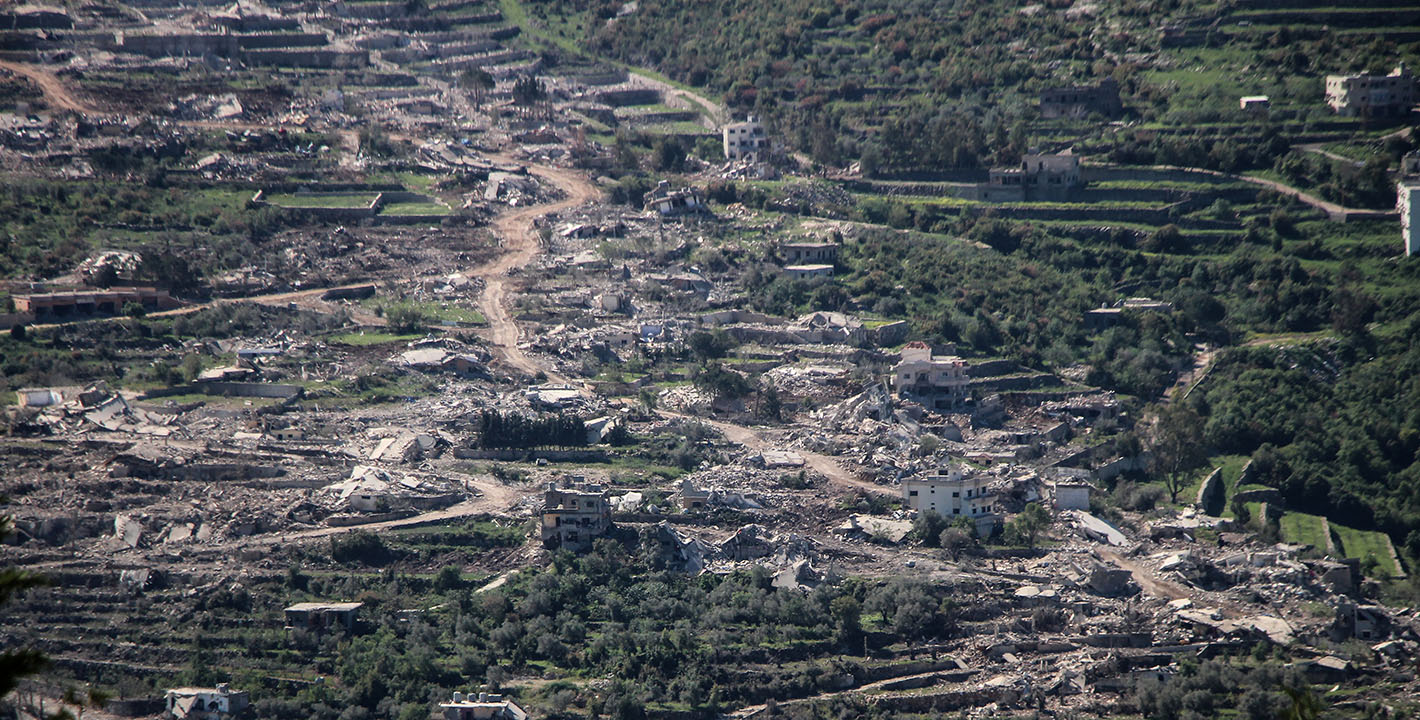
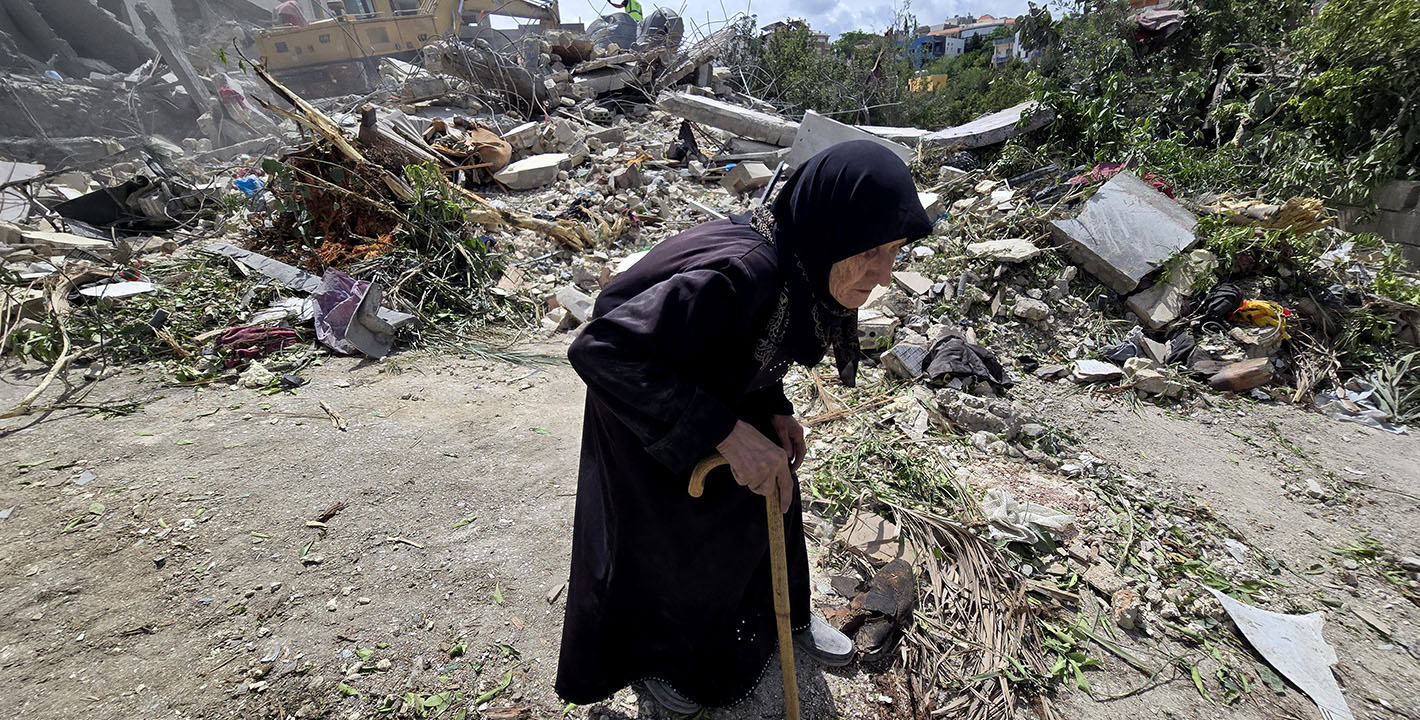
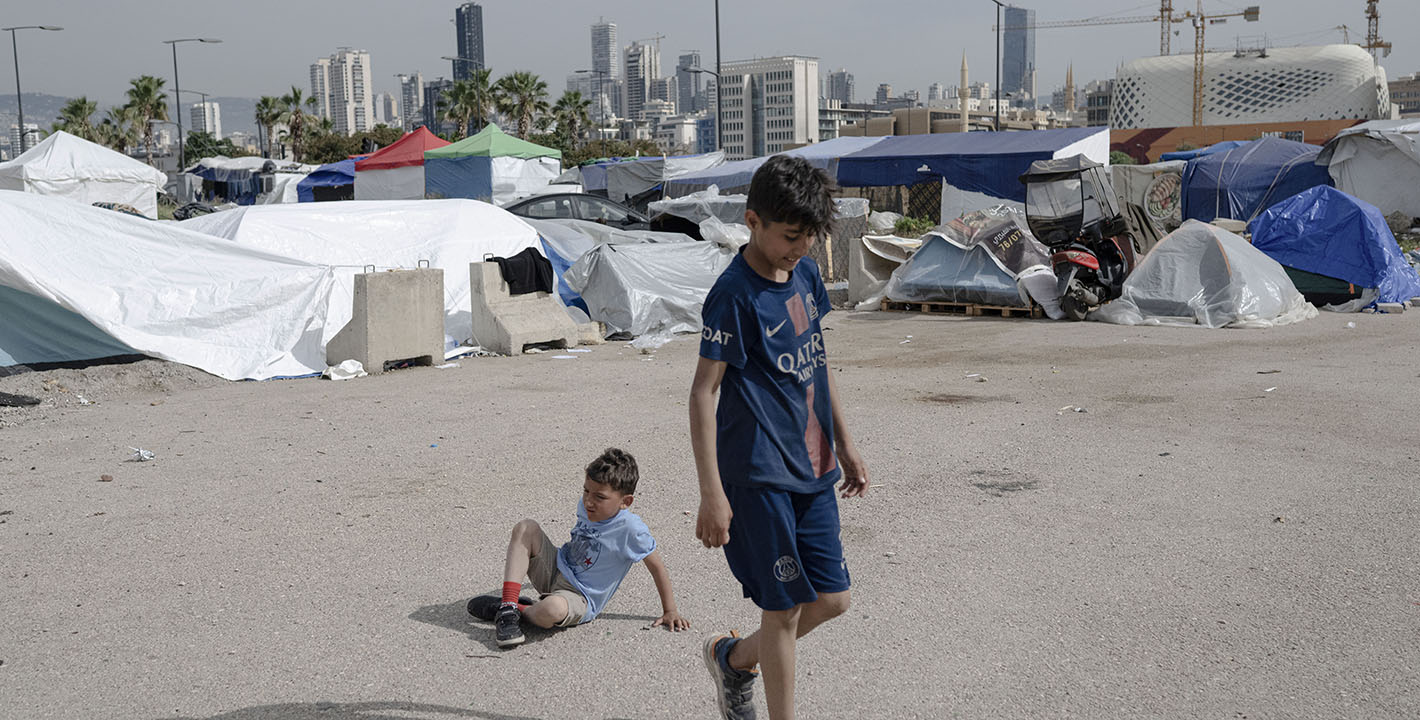
To understand why that is the case, we have to pause and look at where Lebanon’s Shiites are today. In early April, Lebanon’s Ministry of Social Affairs reported that 1.05 million people had been displaced by Israel in Lebanon, and the vast majority of them are Shiites. Much of the community is not only dispersed and shattered, it also faces considerable hostility from other Lebanese sectarian communities who are angry with Hezbollah for having dragged Lebanon into its third war with Israel in 20 years. This comes on top of thirteen years of the party’s highly unpopular hegemony over the political system, in which it protected a political class that has plundered and bankrupted the country. At the same time, Shiites look to their east and see a Salafi regime in Syria that they believe would like to exact revenge for Hezbollah’s support of Bashar al-Assad’s regime. And to their south, they see the Israeli steamroller. In such a fraught environment, can anyone realistically expect that a community facing a perceived existential threat will surrender its weapons willingly?
So, if the Lebanese armed forces cannot seize Hezbollah’s arsenal militarily and the Shiite community refuses to relinquish its weapons, one has to look for alternative methods of imposing the state’s monopoly over violence. Common sense leads to the conclusion that only by including Iran in some broad package deal that involves Hezbollah’s disarmament, with guarantees that Shiites will be protected, can there be any chance of making progress. But since the Lebanese authorities are trying to distance themselves from Iran, and since Israel is likely to use a peace agreement with Lebanon to impose its supremacy over the country, such an arrangement is almost inconceivable.
This raises the question of what kind of peace Israel would like to negotiate. Previous Israeli behavior provides clues. In Syria, Gaza, and now Lebanon, the Israelis have shown that they intend to impose buffer zones inside their neighbors’ territory in order to protect their own borders. When it comes to security, Israelis will certainly also try to secure variations on past Israeli offers. For example, take the allegedly “most generous” offer that Israel made to the Palestinians. As prime minister, Ehud Olmert presented a plan in September 2008 that offered them a state with severely restricted sovereignty. Palestine was denied an army and an air force, it was denied control over its eastern border with Jordan, and it would have been forced to accept that Israel’s armed forces enter Palestinian territory and airspace to pursue any enemies.
It seems probable that Israel will approach a final agreement with Lebanon with similar reasoning. The proposal to create an economic zone in the border area could well set up a governing authority that has a say on who can enter such an area. This means that, given its participation in such an authority, Israel could be granted veto power over which Lebanese citizens can access sovereign Lebanese territory. The Israelis may also demand the freedom to deploy forces inside Lebanon and continue overflights to guard against potential threats, and might even demand oversight over Lebanon’s borders with Syria.
Such demands would be untenable for the Lebanese, but if their priority is to break free from Iran’s embrace, which means tying themselves to a U.S.-dominated order, then they could find themselves without much latitude to withdraw from negotiations. Their efforts may instead be focused on encouraging the United States to persuade Israel to make concessions that lend credence to Lebanon’s diplomatic path with the Israelis. If the state can negotiate a ceasefire and bring inhabitants of the south back home through such a process, it could build momentum that limits Iran’s and Hezbollah’s ability to thwart the process, which the calamitous state of the Shiite community makes more difficult.
But that’s a big “if” given that Israel is far more apt to be intransigent, and that the United States is almost certainly going to toe the Israeli line on Lebanon. What we’re likely to see in the coming months is serious strains inside Lebanon, which will make compromise nearly impossible, generating very strong headwinds that change the context of negotiations with Israel. While there are structural reasons to argue against civil war, it is hard to imagine the country will emerge unscathed from this situation.

Editor, Diwan, Senior Editor, Malcolm H. Kerr Carnegie Middle East Center
Michael Young is the editor of Diwan and a senior editor at the Malcolm H. Kerr Carnegie Middle East Center.
Recent Work
Michael Young
Michael Young
Carnegie does not take institutional positions on public policy issues; the views represented herein are those of the author(s) and do not necessarily reflect the views of Carnegie, its staff, or its trustees.
As negotiations with Iran and Lebanon continue, chaos is at the heart of the Netanyahu government’s calculations.
Michael Young
Trade statistics show why Amman has more reason than Damascus to welcome the improvement in bilateral commerce.

Armenak Tokmajyan
Adversaries are to be degraded so deeply, that reconstitution becomes difficult or impossible.

Nathan J. Brown
Israel is encroaching on the country’s territory, while the Lebanese look askance at one another.
Issam Kayssi
The party’s domestic and regional roles have changed, so Lebanon should devise a disarmament strategy that encompasses this.
Michael Young